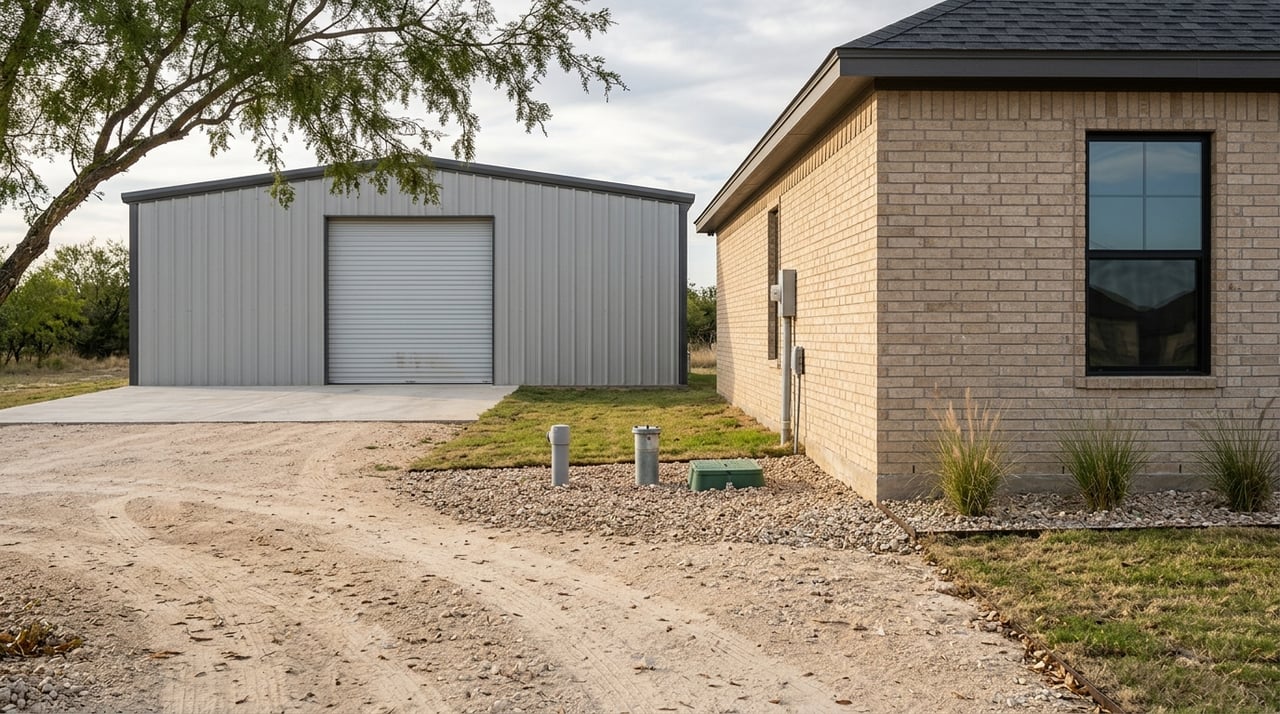
Buying Acreage Near New Home High School: What To Know
Wondering if buying acreage near New Home High School means more freedom, more paperwork, or a little of both? The short answer is yes. If you want space to spread out while staying within reach of Lubbock, New Home can be a smart place to look, but rural land comes with details you do not want to figure out after closing. This guide walks you through the big things to check so you can buy with eyes wide open. Let’s dive in.
If you are looking around 79383, you are probably not just shopping for a house. You are shopping for space, flexibility, and a daily rhythm that feels a little less packed in.
New Home is in Lynn County, and New Home ISD is a small rural district serving about 684 students from Pre-K through 12. Its secondary campus serves grades 6 through 12 and is located at 225 N. Main Street in New Home. The city also describes New Home as a short drive south of Lubbock with easy access via Slide Road.
That location matters. You can get the rural feel many buyers want while still staying connected to Lubbock for work, groceries, healthcare, and day-to-day errands.
One of the first things to know is that acreage near New Home is not one-size-fits-all. Current listing examples show a broad range, from about 1-acre lots to tracts larger than 25 acres.
You may see smaller lots around 1.0 to 1.51 acres, mid-range tracts around 3.0 to 3.19 acres, and larger parcels in the 10 to 13 acre range. There are also 20 to 26 acre pieces on the market. Some active listings mention features like fencing, room for barns or pools, space for 4-H or FFA projects, and no HOA.
That said, treat those listings as snapshots, not guarantees. Just because one parcel is marketed as barndominium-friendly or unrestricted does not mean the next one is. Every tract needs its own homework.
This is the kind of detail that sounds boring until it saves you a major headache. Before you get attached to a property, confirm whether the tract is inside New Home city limits, in an unincorporated part of Lynn County, or in a platted subdivision.
Why does that matter? Because rules can change depending on where the land sits. Inside the city, New Home has a residential building permit application, a water, sewer, garbage agreement, and a zoning chapter in its code.
So even if a property feels rural, do not assume it is unrestricted. If the land is in the county or part of a subdivision, you may be dealing with a different layer of approvals or recorded restrictions.
With acreage, water is not a casual question. It is one of the first things you should verify.
If a tract is connected to the city system, ask for the latest Consumer Confidence Report and confirm whether service is already available at the property. New Home’s 2024 report says the city provides groundwater from the Ogallala Aquifer.
That same report also shows an arsenic sample of 18 parts per billion against a maximum contaminant level of 10 parts per billion, with a violation flagged. It also shows fluoride at 3.9 parts per million against a 4.0 parts per million maximum contaminant level. Those are not details to skip past, so make sure you review the most current city notices and service information as part of your due diligence.
If the tract is on a private well or will need one, get specific. Lynn County is within the High Plains Underground Water Conservation District No. 1, and that district says wells expected to produce 17.5 gallons per minute or more need a permit, while lower-yield wells can be registered.
You should also ask for the well permit or registration status, well depth, expected yield, and recent water test results. Texas A&M AgriLife says private well owners are responsible for managing their own water and should test at least once a year.
In plain English, do not stop at “there’s a well.” You want to know how it performs, whether it is properly documented, and what the water quality looks like.
If a property is not connected to city sewer, septic moves to the top of your checklist. This is another area where you do not want vague answers.
The Texas Commission on Environmental Quality says a permit and approved plan are required to construct, alter, repair, extend, or operate an on-site sewage facility. The site must also be evaluated before construction. TCEQ also notes that local permitting authorities can have stricter standards than the state minimum.
If a septic system already exists, ask for the permit, site evaluation, installer information, and maintenance records. TCEQ also notes that conventional septic tanks generally need pumping every three to five years, so maintenance history matters.
Acreage buyers often focus on the land itself and forget to ask how access actually works. That can be a mistake.
Lynn County’s subdivision page includes permit applications for culvert installation and concrete dip drive installation. County commissioners also accepted groundwater availability certification for platting in June 2024, which tells you that road access, culverts, and subdivision platting can trigger county-level review.
If a tract fronts a county road or FM road, ask for any driveway, culvert, or access documentation. You want to know whether access is already approved, what improvements may be required, and whether there are added costs before you can use the property the way you want.
The phrase “country property” makes buyers think freedom. Sometimes that is true. Sometimes it is only half true.
You should verify recorded deed restrictions, HOA rules if any apply, livestock allowances, and whether barns, shops, or barndominiums are allowed. Some current listings around New Home advertise no HOA or barndominium-friendly setups, but that does not replace parcel-specific verification.
This step is especially important if you plan to do more than just place a home on the land. If your dream includes a shop, animals, extra outbuildings, or a custom setup, ask those questions before you fall in love with the view.
Acreage and property taxes go hand in hand. If you are comparing multiple tracts, this can be one of the biggest numbers that changes your monthly ownership cost.
Lynn CAD provides an Application for 1-D-1 Open-Space Agricultural Use Appraisal. It also lists taxing authorities that can appear on a property tax bill, including Lynn County, New Home ISD, the City of New Home, and High Plains UWD #1.
If a tract may qualify for 1-D-1 agricultural valuation, ask about it early. You should also confirm which taxing entities apply to the property you are considering so there are no surprises later.
On paper, New Home is workable for buyers who still need Lubbock access. A road-distance tool estimates the trip from Lubbock to New Home at 24.2 miles and about 47 minutes via US 87, FM 211, and I-27. The city also says residents have easy and quick access to healthcare, groceries, and other services.
That said, acreage life usually means more windshield time. School events, sports, appointments, groceries, and supply runs can all take longer than they would in town.
This is not a dealbreaker. It is just worth planning for honestly so the lifestyle fits your day-to-day routine.
Before you move forward on a tract, make sure you can answer these questions:
Buying acreage near New Home High School can be a great move if you want room to breathe without feeling cut off from Lubbock. But rural property is a different animal than buying a standard in-town lot. Water, septic, access, permits, restrictions, and tax treatment all need a closer look.
The good news is that none of this has to be overwhelming when you know what to ask upfront. A little diligence now can save you a pile of stress later, which is kind of the whole goal.
If you want help sorting through acreage options near New Home and figuring out which properties are worth a closer look, reach out to Tess Hernandez. She’ll help you make real estate make sense, without the fluff.

Long-term investment anxiety is one of the quietest fears buyers carry into a purchase. Here is how to research a neighborhood properly before you buy, what signals to… Read more

It is the fear people rarely say out loud but search privately. Here is an honest look at what actually happens, how to protect yourself before you ever close, and why… Read more

The 20 percent myth is keeping more people out of homeownership than almost any other misconception in real estate. Here is what you actually need and what your real o… Read more

Losing a home you love to another buyer is one of the most frustrating experiences in real estate. Here is how it happens, how to prevent it, and what being truly read… Read more

Four bedrooms, two and a half baths, a private pool and spa, a gated backyard, a Bluetooth connected sound system, and every detail done right. Welcome to 1005 Bucking… Read more

Buyer Knowledge & Fear
Rates are higher than they were two years ago and buyers are feeling it. But the question of whether now is a bad time to buy is more nuanced than the rate alone. Here… Read more

Buyer Knowledge & Fear
It is one of the fears people carry privately when they buy a home and almost nobody talks about it honestly. Here is what actually happens if you miss a mortgage paym… Read more

Buyer Knowledge & Fear
Feeling ignored, uninformed, or let down by your agent is more common than the industry likes to admit. Here is how to tell the difference between a rough patch and a … Read more
Get assistance in determining current property value, crafting a competitive offer, writing and negotiating a contract, and much more. Contact me today.
TESS HERNANDEZ
6901 Quaker Ave Ste 100 Lubbock, TX 79413