What’s the Current Absorption Rate in My Subdivision?
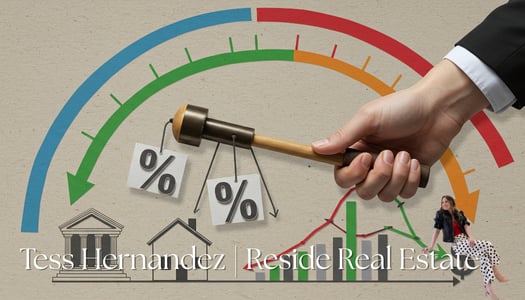
Most people watch average prices and days-on-market when trying to understand how homes are selling. But the absorption rate—the speed at which listings turn into sales—is what actually defines your neighborhood’s pace.
In Lubbock, that number can vary dramatically from one subdivision to the next.
So what exactly is absorption rate?
It measures how long it would take to sell every active home if no new listings hit the market, based on the current sales pace. A balanced market typically shows 3 to 6 months of inventory. Fewer months means demand is outpacing supply—a seller’s market. More months indicates buyers have the upper hand.
Here’s what I’m seeing right now in early 2025:
South Lubbock (Cooper ISD areas): 2–3 months of inventory, meaning homes are moving quickly with strong demand.
Frenship ISD and Northwest Lubbock: Around 4 months, a healthy balance where pricing accuracy matters most.
Higher-end neighborhoods like Oakmont, The Trails, and Lakeridge: roughly 5–6 months, which reflects normal luxury turnover rather than softness.
What makes this number powerful is how specific it gets. You don’t need to know how Lubbock County is performing—you need to know your subdivision’s absorption rate. That single figure reveals whether it’s time to list, hold, or adjust.
For sellers, it helps guide pricing and expectations. If your area’s absorption rate is under three months, you can expect faster showings and stronger offers. If it’s over six, patience—and perfect presentation—will pay off.
For buyers, it signals urgency. Low absorption means acting decisively; higher numbers suggest room to negotiate.
I calculate absorption rates weekly using MLS data, comparing pending-to-active ratios for each neighborhood. It’s how I keep clients informed on the exact tempo of their market—not just the county average.
Real estate isn’t one-size-fits-all, and neither is timing. Knowing your absorption rate puts strategy behind every decision.
Because in Lubbock, success isn’t about waiting for the market—it’s about reading it right.
— Insights from Tess Hernandez, Realtor | Reside Real Estate

You can love a house and be wrong about the neighborhood. Here is how to research a neighborhood properly before you commit, what to look for beyond the obvious, and w… Read more

Getting approved and actually affording the payment are two different things. Here is the gap most buyers do not talk about, how to evaluate what you can genuinely sus… Read more

Losing a home you love to another buyer is one of the most emotionally painful experiences in real estate. Here is how to position yourself to win when it matters, wha… Read more

It is one of the most common fears first-time buyers carry into a purchase. Here is how to protect yourself before closing, what to do if something does break, and why… Read more
A price reduction feels like losing but it does not have to be. Here is how to think about it clearly, when to make the move, and how to do it in a way that actually g… Read more

Buying the listing is one of the oldest tricks in real estate and it costs sellers more than they realize. Here is how to spot it before you sign anything, what questi… Read more

A low appraisal is one of the most stressful moments in a real estate transaction from the seller's perspective. Here is exactly what it means, what your options are, … Read more

No, you do not. But knowing which items are worth addressing and which ones are not is the difference between a smooth negotiation and a deal that falls apart over thi… Read more

The inspection is the moment sellers dread most and it does not have to be. Here is what actually happens after an inspection, what you are and are not obligated to do… Read more
Get assistance in determining current property value, crafting a competitive offer, writing and negotiating a contract, and much more. Contact me today.
TESS HERNANDEZ
6901 Quaker Ave Ste 100 Lubbock, TX 79413