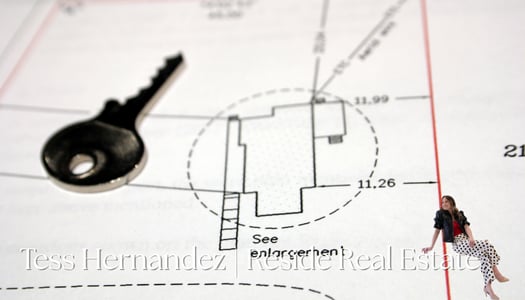
What Are Property Surveys, and Why Do They Matter?
Before you buy a home, it’s easy to focus on what’s inside—the floor plan, the kitchen, the finishes. But one of the most important parts of any real estate deal in Lubbock is what’s on paper: your property survey.
A property survey is a scaled drawing that shows the exact boundaries and physical features of a piece of land. It’s the legal snapshot of where your property begins and ends—and it matters more than most buyers realize.
Here’s what a survey includes:
The precise lot dimensions and boundary lines
Locations of structures, fences, driveways, and easements
Utility lines and drainage access points
Any encroachments—where a structure crosses into someone else’s property (or theirs into yours)
Why Surveys Matter
They Confirm What You’re Buying.
A fence line isn’t always accurate. A survey ensures you’re getting what’s legally yours—and not what the neighbor’s fence suggests.
They Protect You from Disputes.
If a future neighbor challenges your property line, your recorded survey serves as proof of ownership boundaries.
They’re Required for Lender Approval.
Most lenders require a recent survey (usually within the last few years) before funding your loan. It confirms the home and structures match the legal description.
They Reveal Easements and Restrictions.
Easements allow access for utilities, drainage, or city maintenance. A survey shows where they are—so you don’t accidentally build a fence or shop on city property.
In Texas, either the buyer or seller can pay for a new survey, depending on what’s negotiated in the contract. If the seller has an existing one that’s still accurate and accepted by the title company, that can save both parties time and money.
When I represent buyers, I review the survey line by line with the title company before closing. If anything looks questionable—like a fence outside the boundary or a shed sitting on an easement—we address it immediately.
A survey doesn’t just draw a map—it draws protection.
In short: if the deed says you own it, the survey proves it. And in real estate, that little piece of paper can prevent a lot of expensive conversations later.
— Insights from Tess Hernandez, Realtor | Reside Real Estate

The person selling you the home and the person representing that seller in the transaction are the same person. Here is what Texas law requires in this situation, what… Read more

You just found out the listing agent is the seller's mom. Can they do that? Does it have to be disclosed? What does it mean for your offer? Here is what Texas law actu… Read more

You had a showing scheduled. The listing agent called and said they already accepted a contract. Nobody gave you a chance to move up the timeline, make a competing off… Read more

Going active on the MLS while telling buyers they cannot see the home for a week sounds like a strategy. In most cases it is the opposite. Here is what actually happen… Read more

They loved it but picked another house. The kitchen was not their style. No feedback at all. If that is all you are hearing after showings you are not alone and there … Read more

A friend had a nightmare with the same builder. You love the home. Here is how to evaluate that situation honestly, what questions to ask, and how to protect yourself … Read more
You found a spec home that is almost perfect but you want different flooring, an extra outlet in the garage, or a different cabinet color. Here is exactly how much fle… Read more
You walked into a new construction community, saw the price sheet, and immediately wondered why there is no room to negotiate the way you would with a resale home. Her… Read more
You came home to find every light in the house blazing, the back door unlocked, and the garage door wide open. Nobody stayed behind on purpose. They just left without … Read more
Get assistance in determining current property value, crafting a competitive offer, writing and negotiating a contract, and much more. Contact me today.
TESS HERNANDEZ
6901 Quaker Ave Ste 100 Lubbock, TX 79413